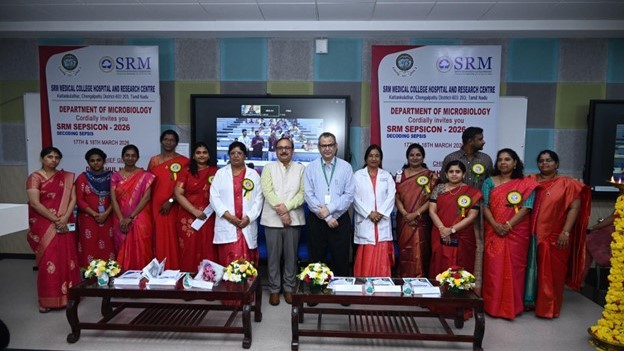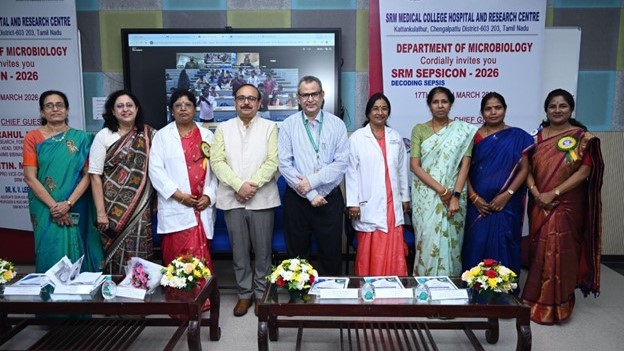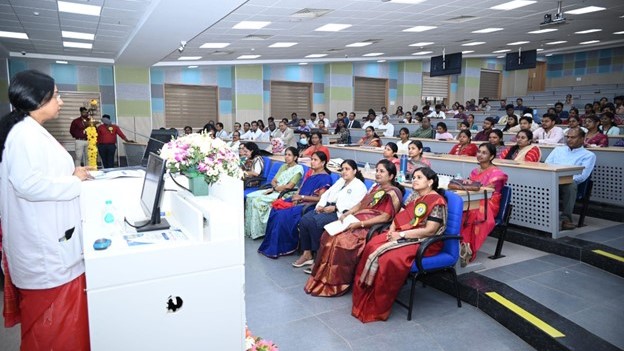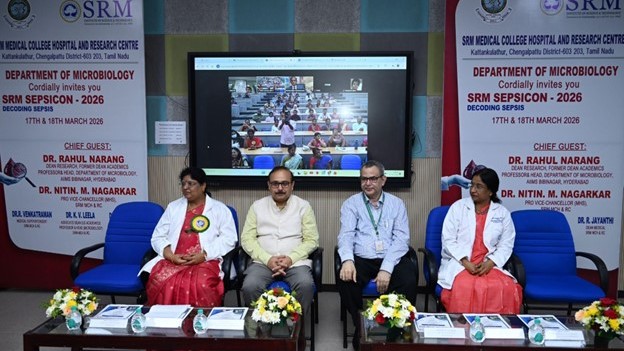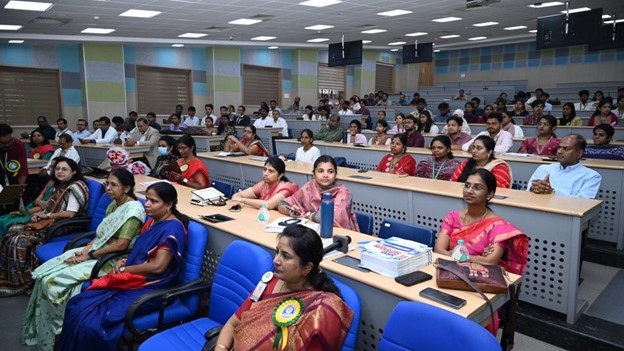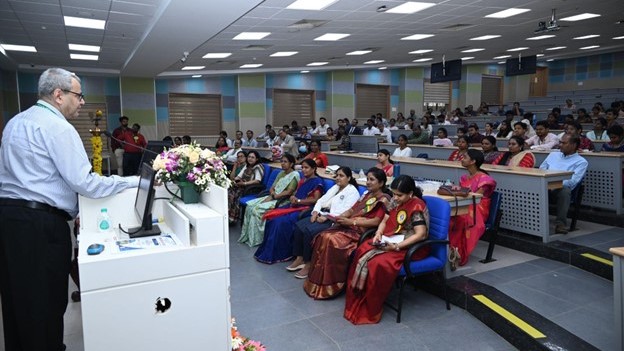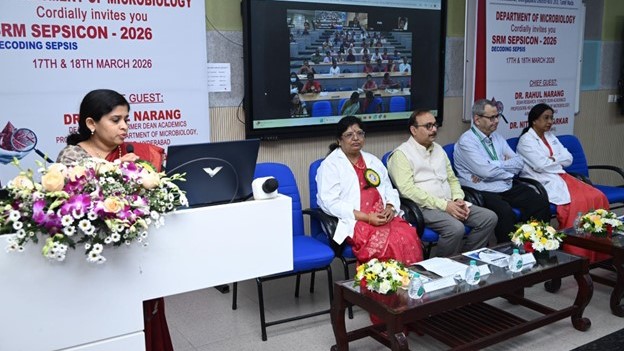

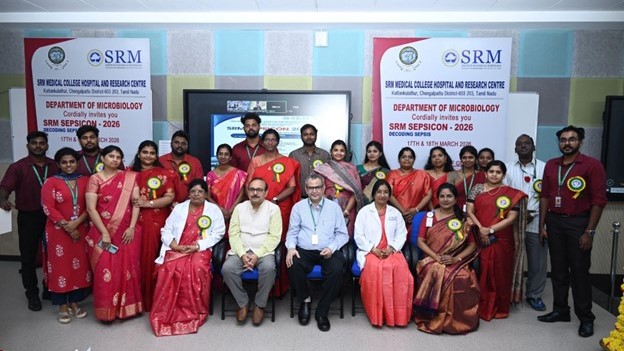
The Department of Microbiology, SRM Medical College Hospital and Research Centre (SRMMCH&RC), hosted SRM SEPSICON 2026 – “Decoding Sepsis” on 17th and 18th March 2026. The two-day national academic programme brought together leading clinicians, microbiologists, researchers, and students from across India, creating a strong platform for knowledge exchange, hands-on training, and multidisciplinary collaboration in sepsis management.
The programme began with Day 1 workshops focused on strengthening practical competencies in infection control, antimicrobial stewardship, and advanced diagnostics. Titled “Beyond the Vein: Mastering CLABSI, BSI, and Infection Control Audits,” “Decode, Decide, De-escalate: A Hands-on AMSP Workshop,” and “Sepsis Unmasked: A Hands-on Workshop on Blood Diagnostics,” these sessions delivered intensive, skill-based training.
The workshops were led by experienced experts including Dr. Lavanya S, Professor at PSG Institute of Medical Sciences and Research, Coimbatore; Dr. Malathi M, Consultant and Hospital Infection Control Officer at Meenakshi Super Speciality Hospital; and Dr. Shashikala, Professor and Head of the Department of Microbiology and Laboratory Director at PIMS, Puducherry. Participants engaged in case-based discussions, laboratory demonstrations, antibiogram preparation, infection control audits, and antimicrobial stewardship practices in intensive care settings.
Day 2 featured the scientific conference, comprising keynote lectures, expert sessions, and panel discussions addressing current challenges in sepsis care. Eminent speakers included Dr. Beena Antony, Vice President of the Anaerobic Society of India and Professor of Microbiology at Father Muller Medical College, Mangalore; Dr. Malini R. Capoor, Professor of Microbiology at VMMC and Safdarjung Hospital, New Delhi; and Dr. V. Dilli Rani, Professor and Head of Microbiology at Stanley Medical College, Chennai.
The sessions were chaired by distinguished academicians such as Dr. Chitra Lekha, Professor and Head of Microbiology at Sree Balaji Medical College, Chennai; Dr. Anupma Jyoti Kindo, Professor of Microbiology at Sri Ramachandra Institute of Higher Education and Research (SRIHER), Chennai; and Dr. S. Thasneem Banu, Director of the Institute of Microbiology at Government Madras Medical College, ensuring high-quality academic engagement and expert moderation.
A key highlight of the conference was the multidisciplinary panel discussion titled “Sepsis: Unwrapping the Mystery – From Early Warning Signs to Life-Saving Interventions.” The panel featured Dr. Sarath Balaji, Associate Professor and Paediatric Pulmonologist at the Institute of Child Health, Chennai; Dr. Muthamilan Chinnairusan, Paediatrician at Oak Hill Hospital, Florida, USA; Dr. M. Anuradha, Professor and Head of Obstetrics and Gynaecology at SRMMCH&RC; and Dr. Yamunadevi, Senior Consultant in Infection Prevention and Control at Apollo Hospitals. The discussion emphasized the importance of coordinated, multidisciplinary approaches in improving sepsis outcomes.
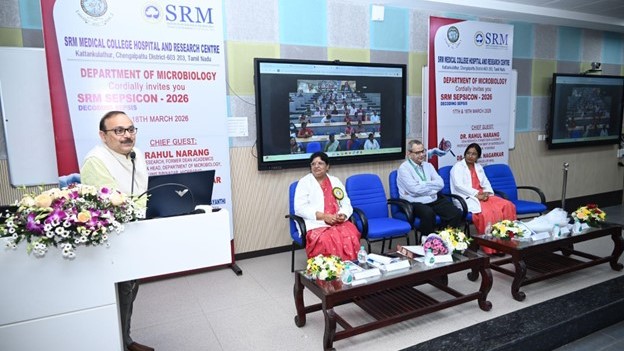
The inaugural ceremony was graced by Dr. Rahul Narang, Former Dean Academics, AIIMS Bibinagar, Hyderabad, who served as Chief Guest. In his address, he highlighted that “One Health is not merely a concept but an operational framework integrating human, animal, and environmental health, and the future of healthcare lies in interdisciplinary collaboration.”
Dr. Nithin M. Nagarkar, Pro-Vice Chancellor (MHS), SRMIST, emphasized the importance of real-time collaboration between clinicians, microbiologists, and researchers for effective healthcare delivery. Delivering the keynote address, Dr. R. Jayanthi, Dean (Medical), SRMMCH&RC, described sepsis as a race against time and stressed the critical need for early diagnosis and prompt intervention.
In her welcome address, Dr. K. V. Leela, Associate Dean (UG Academics) and Professor and Head of Microbiology at SRMMCH&RC, underscored the pivotal role of microbiologists in sepsis diagnosis and highlighted antimicrobial resistance as a growing global concern requiring urgent and unified action.
The conference also featured a special lecture on “Presepsin: A Novel Biomarker for Early Sepsis Diagnosis” delivered by Dr. Subha S, Consultant Microbiologist and Infection Control Officer at Dr. Rela Institute and Medical Centre, offering valuable insights into emerging diagnostic advancements.
Overall, SRM SEPSICON 2026 effectively addressed critical challenges in sepsis care, including delayed diagnosis, antimicrobial resistance, and complex infections such as fungal sepsis. By promoting early recognition, evidence-based interventions, and integrated clinical-laboratory decision-making, the programme significantly contributes to improving patient outcomes and strengthening the healthcare response to sepsis.